



Author By
Patricia klepitch
Views
42
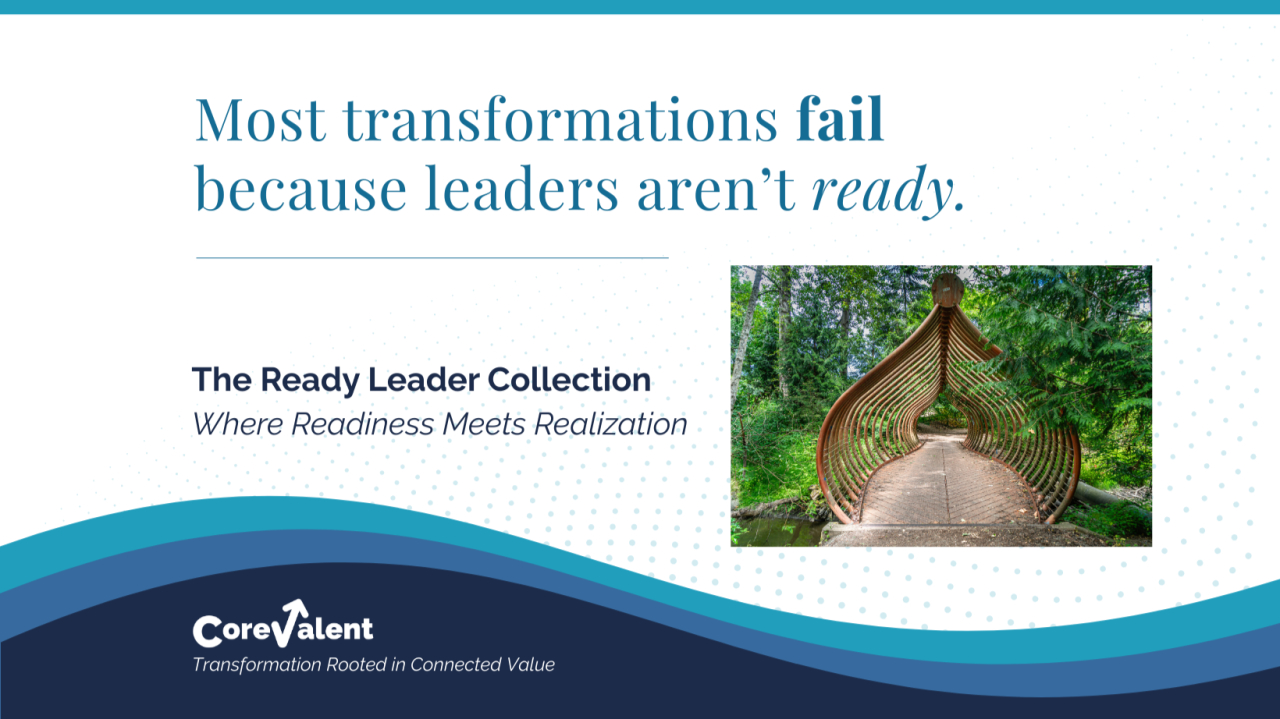
The Ready Leader Collection – Release 1
This pattern shows up everywhere. Organizations invest millions in proven technology, then struggle with results despite doing everything "right":
Data Migrated
Solution Tested
Training Delivered
Adoption Complete
And yet, value lags or fails to materialize. The missing piece? A readiness foundation.
 Transformation can be a lonely journey...but it doesn't have to be.
The Patterns That Undermine Transformation
Even when the strategy is clear, the data is clean, and adoption looks strong, transformation can still slip. The problems aren’t always loud or obvious. They creep in through subtle gaps that weaken alignment or distort value.
I’ve seen these patterns show up again and again, no matter the industry or how capable the team. Leaders often discover them too late:
Misaligned leadership. Leaders may think they’re aligned, but cracks appear when assumptions, language, and measures of success don’t match the business strategy, decision paths, or intent. In one case, executives all used the same words — “improved service” — but each had a different meaning in mind: customer on-time delivery, internal cycle-time reduction, and sales responsiveness. The signals confused the organization, and trust in leadership weakened.
Skipped foundational processes. When go-live becomes the primary measure of success, balance is lost. Urgencies to cut cost, speed timelines, or skip the processes that strengthen deployment upfront operationalize flaws and make sustainment harder. What feels like time gained in the moment often becomes time lost in rework.
Tribal knowledge gaps. The greatest transformation asset is the knowledge of people who understand how work really gets done day to day. When that knowledge isn’t captured in the design, adoption falters and workarounds and exceptions get reinforced in the new solutions. I’ve seen operators keep notebooks of implied rules at their desks; when those rules aren’t built into systems, inefficiencies become permanent.
Distorted signals. Even with a well-executed data migration, data that lands cleanly can still fail to flow across functions and systems at scale. Signals erode as they move, creating hidden complexity. What looks like accurate information in one part of the business can arrive distorted in another, leaving leaders debating “whose numbers are right” instead of solving real problems.
ROI illusions. Internal efficiency gains are valid goals, but if they aren’t balanced with the value customers and partners actually want — and are willing to pay for — the impact falls short. A faster report or a leaner headcount doesn’t matter if customers still experience late shipments or quality issues.
Tech amplification. AI and automation don’t discriminate. They scale flaws just as quickly as they scale well-designed processes. A broken handoff in a manual process might waste hours. A broken handoff embedded into an automated workflow can waste weeks of production.
Avoiding these patterns isn’t just about project plans or bigger budgets. It’s about leadership.
When Readiness Creates a Different Outcome
I’ve also seen organizations approach transformation differently, and the results speak for themselves. In one program, leadership alignment was established before a single capability was configured. Leaders spoke with one voice, reinforcing the same priorities at every level.
When tribal knowledge surfaced, it was captured and built into the design. When data conflicts emerged, ownership and definitions were clarified. And when teams faced pressure to accelerate, leaders resisted shortcuts and stayed consistent on purpose.
The transformation didn’t just launch on time — it delivered outcomes the business could feel. Employees trusted the system, adoption was steady, and customers noticed the improvements. That success became a foundation the organization could build on for the next wave of change.
 Ready Leaders create bridge the gaps others fear to cross.
What It Means to Be a Ready Leader
A Ready Leader shows up beyond financial sponsorship and meeting-room niceties. They lean into the hard work of alignment, clarity, and follow-through.
They ask the questions that surface hidden assumptions, hold teams accountable to process readiness, and insist on connecting technology choices back to business intent. Just as importantly, they model the very behaviors they expect from others — demonstrating adoption, not just directing it.
Readiness takes root when leaders are present, engaged, and consistent. It is proven not in speeches or town halls, but in the everyday moments where leaders choose to stay visible and active.
Showing up as a Ready Leader means more than avoiding mistakes. It means preparing for what transformation will truly demand.
Ready Leaders stay grounded when pressures mount, when alignment frays, and when progress feels slower than expected. They anticipate the moments when urgency tempts shortcuts, when tribal knowledge is overlooked, or when optimism hides complexity. And they lean in, not away.
They bring presence, discipline, and intent to every stage. And they model the behaviors they expect from others, proving that readiness isn’t delegated. It’s lived.
The Intent of the Ready Leader Collection
The Ready Leader Collection was created to spotlight how leaders can step into this role with clarity and confidence. Each release will share practical ways leaders can strengthen readiness and make it real in their organizations.
My hope is that these insights spark interest, encourage curiosity, and open the door to deeper conversations — including how CoreValent can support your journey.
Release 1 has focused on what it means to show up as a Ready Leader and why presence, consistency, and modeling matter. Release 2 will build on this foundation by peeling back the layers of readiness from the Ready Leader’s perspective — starting with leadership and alignment, and continuing through transformation readiness, culture and purpose, process and data, value realization, and digital enablement. Together, these disciplines show how Ready Leaders translate intent into action and sustain transformation over time.
Because transformation doesn’t fail for lack of vision. It fails when readiness is treated as a milestone instead of a muscle.
Article Reference: https://tinyurl.com/yvsjd2r7